Limerence & Relationship Recovery
How Long Does Limerence Last? An Honest Timeline of Getting Over Someone
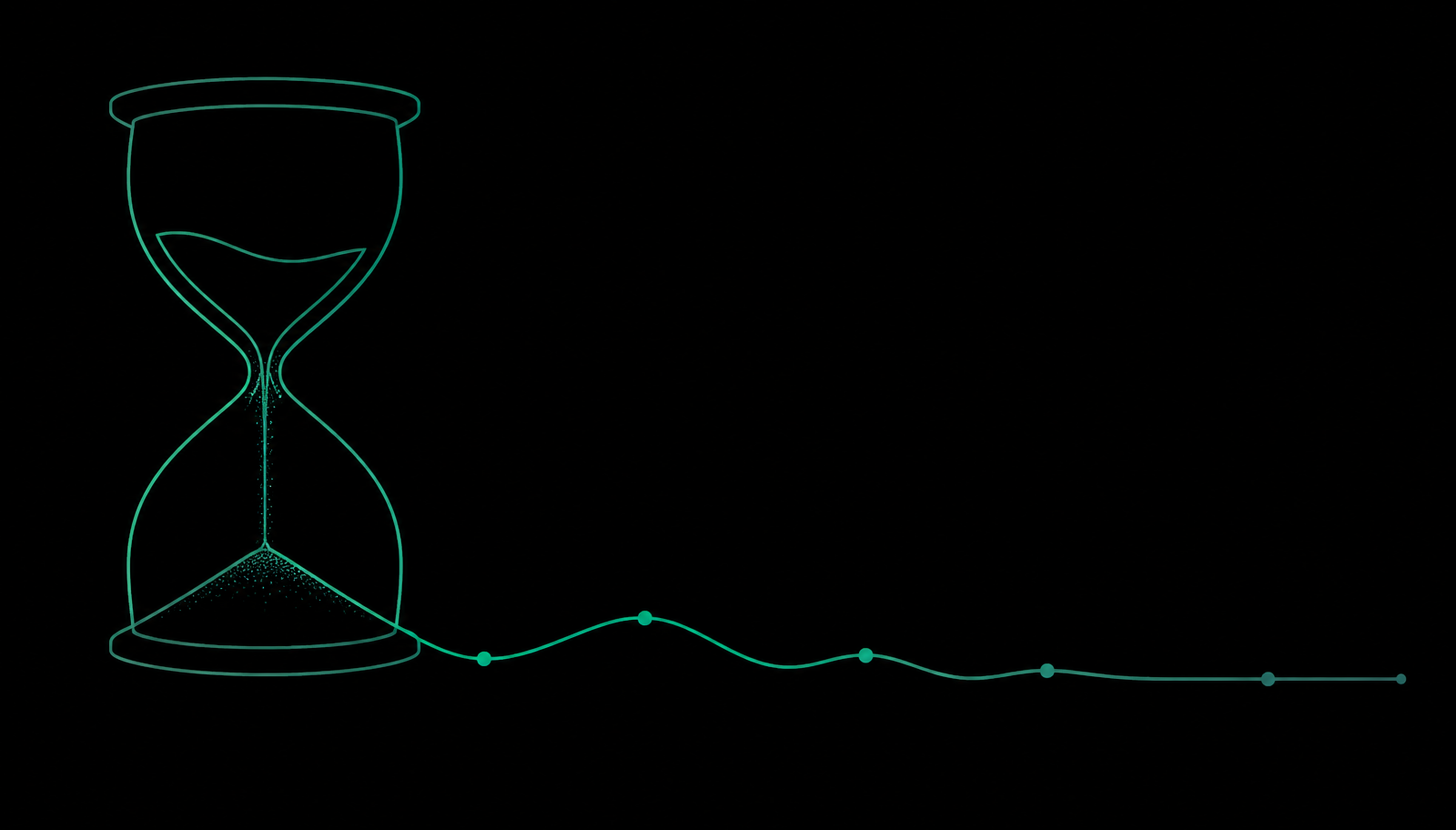
You want a number. Not comfort, not perspective — a number, so you can work out whether you can survive it. That's a completely reasonable thing to want, and most articles refuse to give one.
So here it is, with the caveat that averages describe groups and you're a person: limerence commonly runs from several months to a couple of years when contact continues. Dorothy Tennov's original interview work often cited an average in the region of eighteen months to three years for full episodes. But that figure describes the untreated version — the one where you're still checking, still hoping, still feeding it.
Part of our guide to limerence recovery and getting someone out of your head.
What actually changes the number
Duration isn't fixed by how much you cared. It's mostly determined by how often the loop gets fed. Three things dominate:
- Contact. Any contact — messages, glimpses, mutual-friend updates — restarts the reinforcement cycle. Intermittent contact is the single biggest extender.
- Hope. As long as some part of you is running a plausible scenario where this works out, the state has fuel. Genuine hopelessness is grim, but it's also where recovery accelerates.
- Fantasy rehearsal. Deliberately replaying imagined scenes keeps the reward pathway active. Most people underestimate how much of their day goes into this.
A realistic timeline
Days 1–3: acute withdrawal
Physical symptoms dominate: chest tightness, no appetite, broken sleep, adrenaline. Craving peaks — the extinction burst. Your only objective is not to act.
Week 1: fog
The panic dulls into flatness and poor concentration. Days feel long and undifferentiated. This is where the bargaining thoughts arrive, disguised as reasonable ideas about closure and friendship.
Weeks 2–3: the first real hours of relief
Sleep usually improves before mood does. You get an hour, then a morning, that belongs to you. The relief often arrives with guilt attached, as if feeling better is a betrayal. It isn't.
Weeks 4–8: ambush season
The baseline is clearly better and the spikes are still savage — triggered by a song, a street, a Sunday. What's changed is duration: what once ruined a week now ruins an afternoon. This stretch is where people wrongly conclude they're not improving, because they're measuring by the spikes.
Months 3–6: reorganisation
Thoughts become recollections rather than cravings. You begin to remember the relationship in full colour, including the parts you'd edited out. Work, appetite and interest in other people typically return in this window. Research on romantic breakups broadly supports a few months as the point where most people report substantial recovery, with structured effort shortening it.
Beyond six months
Occasional reminders continue for years and don't mean you've relapsed. The difference is that they land as memory rather than as need. If the obsessive quality genuinely hasn't shifted at all after six months of real no contact, that's a signal to bring in a therapist rather than to try harder alone.
“Nobody told me the worst part wasn't the first week. It was week five, when everyone assumed I was fine and I was still counting days.”
The measure that matters
Don't measure whether you've stopped thinking about them. Measure how long a thought lasts, and how quickly you come back. That number improves long before the thoughts stop, and it's the one that tells you the truth about where you are.
Frequently asked questions
How long does limerence last on average?
Dorothy Tennov's interview research suggested episodes commonly last from a few months up to a couple of years, with figures around eighteen months to three years often cited for full episodes where contact and hope continue. Sustained no contact and stopping fantasy rehearsal shorten it substantially, because both are what keep the state supplied.
How long does it take to get over someone you were obsessed with?
With consistent no contact, most people report acute symptoms easing within two to three weeks and substantial recovery within three to six months. The obsessive, craving quality typically fades well before the memory does, and occasional reminders afterwards are normal.
Why does it feel like I'm not making progress?
Because most people judge progress by their worst moments. Spikes remain intense for weeks while the baseline steadily improves, so measuring the peaks hides the trend. Track how long an episode lasts and how fast you recover from it rather than whether it happened.
Does limerence ever come back after it's gone?
The state can reactivate quickly if contact resumes, which is why re-establishing contact months later so often produces an immediate relapse. Reminders alone rarely restart the full state; renewed uncertainty and contact are what do.
Can limerence last for years?
Yes, particularly when there's ongoing intermittent contact, a workplace or friendship connection, or a live hope of reciprocation. Long-duration cases almost always have a continuing source of uncertainty, which is why identifying and closing those channels matters more than waiting it out.
Should I see a therapist about limerence?
It's worth it if the obsession is affecting your work, sleep or safety, if it's persisted with no change after months of genuine no contact, or if the same pattern keeps repeating with different people. Therapists who work with OCD-type intrusive thinking or attachment patterns are usually the most helpful fit.

Anchored
Break the cycle of limerence and relationship addiction
Break the cycle of limerence and obsessive love. Track no contact, manage urges, and follow science-based milestones toward emotional recovery.
Learn more about Anchored