Limerence & Relationship Recovery
Why Does Heartbreak Physically Hurt? The Chest Pain, the Nausea, the Sleepless Nights
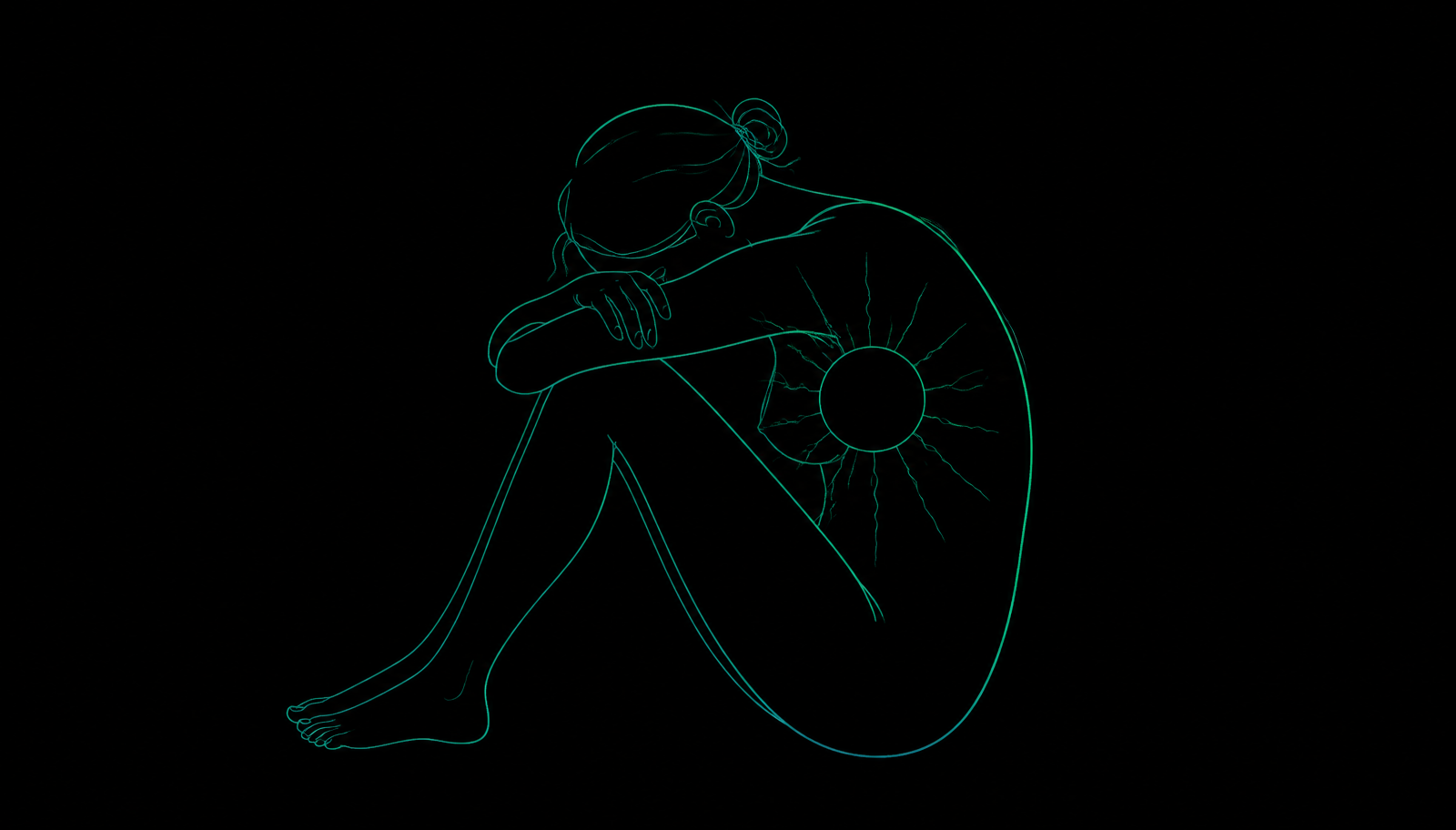
There's a specific fear that arrives around the third sleepless night: something is medically wrong with me. Your chest is tight, you can't finish a meal, your hands shake when you pick up your phone, and you're beginning to wonder whether people actually die from this.
You are almost certainly fine, and you are definitely not imagining it. What you're feeling is your body doing something predictable in response to a genuine physiological event.
Part of our guide to limerence recovery and getting someone out of your head.
Rejection borrows the pain system
Research led by Ethan Kross found that people viewing images of a partner who had recently rejected them showed activity in brain regions also involved in physical pain processing. Earlier work by Naomi Eisenberger on social exclusion pointed the same way. The metaphor of being hurt turns out to be less of a metaphor than we assumed.
Separately, imaging studies of romantic rejection have shown activation in reward and craving regions — the same neighbourhoods implicated in substance withdrawal. Between those two findings, you have pain plus craving running simultaneously, which is a reasonable description of what your chest feels like right now.
What each symptom actually is
- Chest tightness and a heavy ache: sustained sympathetic nervous system activation and chronically tensed chest and shoulder muscles, often worsened by shallow breathing.
- Nausea and appetite loss: elevated stress hormones slow digestion and suppress hunger signalling. Cortisol elevation after significant loss is well documented.
- Broken sleep and 4am waking: cortisol follows a daily rhythm that peaks in the early hours, and a stressed system amplifies that peak into full wakefulness.
- Trembling, cold hands, racing heart: adrenaline. Your body has flagged the loss of an attachment figure as a threat, and threat response is physical.
- Fog and forgetfulness: high stress load reduces working memory and concentration. It's why you're re-reading the same email at work.
What actually helps the body
01Breathe out longer than you breathe in
Extended exhalation increases vagal tone and shifts you out of sympathetic dominance. Four counts in, six to eight out, for two minutes. This is the fastest lever you have on the physical symptoms, and the one people skip because it sounds too simple.
02Move, even badly
Exercise reliably reduces acute stress and improves sleep quality. It doesn't need to be a proper workout — a hard twenty-minute walk in daylight does more for a 4am-waking cycle than any amount of lying still and thinking.
03Eat on a schedule, not on hunger
Appetite is suppressed, so waiting to feel hungry means not eating. Low blood sugar makes anxiety and emotional volatility measurably worse. Small, regular, boring food is a legitimate part of recovery.
04Protect sleep structurally
Same wake time daily, morning light, no phone in bed. The phone rule matters twice over here: it's both a sleep problem and an access point to the person you're recovering from.
05Say it out loud to someone
Social support is one of the most robust protective factors in the stress literature. Being physically near people who care about you regulates your nervous system in a way that thinking your way through it cannot.
“I genuinely thought I was having a heart attack at 3am. Turns out I hadn't eaten in two days and I'd been holding my breath for a week.”
It does lift, and physically first
Most people find the bodily symptoms ease before the emotional ones do. Sleep starts returning, appetite comes back in patches, the chest loosens. You may still feel wretched, but you'll feel wretched with a functioning body — and that's the platform everything else gets built on.
Frequently asked questions
Why does my chest physically hurt after a breakup?
Sustained stress-response activation keeps the muscles of the chest and shoulders tense and breathing shallow, which produces a genuine ache and tightness. On top of that, research on social rejection has found overlap with the brain's physical pain processing, so the sensation isn't purely muscular. Any severe, crushing or radiating chest pain should be assessed by a doctor rather than assumed to be emotional.
Can you actually die of a broken heart?
Stress cardiomyopathy, sometimes called broken heart syndrome, is a real and documented condition in which extreme emotional stress temporarily weakens the heart muscle. It's uncommon and usually reversible with treatment, but it's a reason to take severe chest symptoms seriously and seek medical care.
Why can't I eat after a breakup?
Stress hormones suppress appetite and slow digestion, so hunger signalling drops sharply during acute distress. Because waiting to feel hungry means not eating at all, it helps to eat small amounts on a schedule — low blood sugar reliably makes anxiety and emotional swings worse.
Why do I keep waking up at 4am?
Cortisol naturally rises in the early morning hours, and an elevated stress baseline turns that rise into full wakefulness. Keeping a fixed wake time, getting daylight early, and exercising during the day tend to restore the cycle faster than trying to sleep longer to compensate.
How long do the physical symptoms of heartbreak last?
The acute physical phase is usually the shortest part: most people notice significant improvement in sleep, appetite and chest tension within one to three weeks, especially once contact stops. Emotional recovery generally takes considerably longer than the bodily symptoms.
Does it get worse before it gets better?
Often, yes. The first two to four days after contact ends tend to be the most physically intense, because craving and stress activation peak together. That spike is a sign the system is recalibrating rather than an indication that stopping contact was the wrong call.

Anchored
Break the cycle of limerence and relationship addiction
Break the cycle of limerence and obsessive love. Track no contact, manage urges, and follow science-based milestones toward emotional recovery.
Learn more about Anchored