Content hub
Food Noise and Binge Eating: The Complete Guide to Getting Your Head Quiet Again
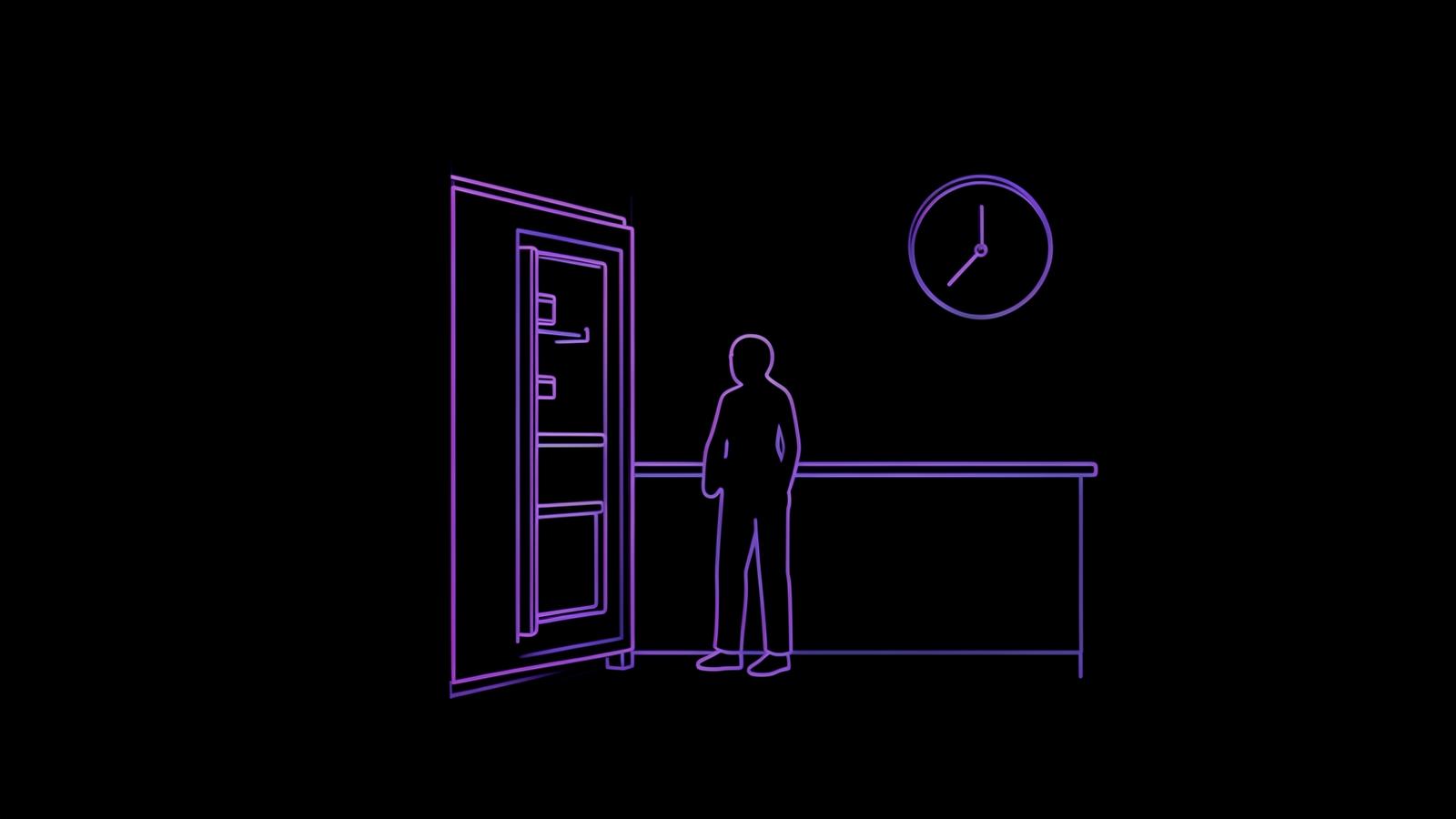
You've probably searched some version of this before. Maybe at 11pm, standing in the kitchen with the fridge door open, already knowing what's about to happen and searching anyway. Or the next morning, sick and swollen and furious with yourself, typing "why can't I stop eating" into a phone you're holding under the duvet.
Here's the thing almost nobody says early enough: the exhausting part usually isn't the eating. It's the noise. The running commentary. Planning lunch during breakfast. Doing arithmetic on what you've already eaten. Negotiating with yourself over a delivery order for forty-five minutes and losing. That mental soundtrack has a name now — food noise — and it is not a character defect.
This page is the map. What food noise actually is, why the binge cycle is so self-reinforcing, what the research says genuinely helps, and where each part of it is covered in depth.
What food noise actually is
Food noise is the persistent, intrusive mental chatter about eating: cravings that arrive uninvited, guilt about the last meal, bargaining about the next one. It became a mainstream term partly because people taking GLP-1 medications kept describing the same startling side effect — the chatter simply stopped — which made the rest of us realise the chatter was never universal. Plenty of people genuinely do not think about food between meals. If that idea is news to you, that's information, not a failure.
Physical hunger builds gradually, is open to any food, and eases when you eat. Food noise appears suddenly, is specific and insistent about one food, and often gets louder immediately after eating. That distinction is the single most useful thing to learn early, because you cannot solve a craving with a sandwich and you cannot solve hunger with willpower.
Why it isn't a willpower problem
- Ultra-processed foods are formulated for maximum drive-to-eat: combinations of fat, refined carbohydrate, salt and texture that don't occur in nature and that reliably produce eating past fullness. Kevin Hall's controlled feeding work at the NIH found people ate several hundred calories more per day on an ultra-processed diet while reporting equal palatability.
- Restriction amplifies the drive. The Minnesota Starvation Experiment documented food preoccupation, ritualised eating and loss of control in previously healthy men — created purely by under-eating, not by any pre-existing pathology.
- Binge eating disorder is the most common eating disorder, more prevalent than anorexia and bulimia combined, and it is a recognised diagnosis rather than a lifestyle failing.
- Cue reactivity is learned. If you have binged in the same chair at the same hour for two years, the chair and the hour now generate the urge on their own, without any decision from you.
- Shame is fuel, not brakes. Self-criticism after a binge predicts more bingeing, not less — the shame-restrict-binge loop is the mechanism, and it's why 'trying harder tomorrow' has never worked.
“I can hold a whole conversation while a second conversation runs underneath it about whether there's still chocolate in the cupboard. That's the part I can't explain to anyone.”
The loop, in the order it actually happens
01A rule gets set
No carbs. Nothing after 7pm. Starting Monday. The rule is usually stricter than anything you'd apply to another person, and it creates the scarcity the rest of the loop feeds on.
02A cue lands
Stress, tiredness, boredom, loneliness, a specific time of day, a specific room, one biscuit. The trigger is often boringly situational rather than emotional, which is why people miss it.
03The noise ramps
Ten minutes of negotiation. This is the only window where intervention is genuinely easy, and it's the window nobody uses because it doesn't feel like an emergency yet.
04The binge, and the strange calm
Most people describe going numb or absent partway through. That dissociation is the actual reward being sought — relief from feeling, not enjoyment of the food.
05Shame, then a stricter rule
The compensation is where the loop closes. Skipping breakfast, punishing exercise, a harsher rule than the one that just failed. Which sets up the next cue perfectly.
What actually works
The evidence base here is unusually clear, and it does not involve stricter rules. Cognitive behavioural therapy has the strongest support for binge eating, and the first thing it does is often counter-intuitive: it establishes regular eating. Three meals and two snacks, on a schedule, whether or not you feel you've earned them. Regular eating alone reduces binge frequency substantially, because it removes the physiological deprivation the urges are built on.
- Regular, scheduled eating — this is the foundation and it comes before everything else.
- Self-monitoring of urges and context rather than calories. What you track changes what you notice, and calorie logs keep attention on numbers instead of triggers.
- Urge surfing: treating the craving as a wave with a peak and a decline instead of a command. Most urges crest and fall within roughly twenty minutes.
- Interrupting the automatic sequence physically — leaving the room, changing posture, extended exhalation — because the window between cue and action is behavioural, not intellectual.
- Dropping compensation entirely. No skipped meals, no punishment workouts, no starting over from zero. Abstinence-violation thinking is what turns one slip into three days.
- Self-compassion, which has been shown to reduce disordered eating behaviour. Not as sentiment: as the specific thing that stops shame from launching the next round.
Read the series
Each article below takes one question people ask over and over and answers it properly — the mechanism, the research, and what to do tonight.
Read the full series
- What Is Food Noise? Why You Can't Stop Thinking About Food All DayPlanning dinner during breakfast. Doing sums on what you've eaten. A second conversation running under every conversation. That's food noise, and it has a mechanism.
- How to Stop Binge Eating at Night (When You've Been Fine All Day)You held it together through breakfast, lunch and the whole afternoon. Then 9pm arrived and you weren't really there any more. There's a reason it's always that hour.
- How to Stop a Binge in the Moment: What to Do in the Next Ten MinutesYou're standing in the kitchen reading this on your phone. Skip the theory: here's what to do with the next ten minutes, and what to do if you're already mid-binge.
- Why Do I Binge After Eating Healthy All Day? The Restrict-Binge Cycle ExplainedIt looks like discipline followed by collapse. It's actually one mechanism with two halves, and the disciplined half is what causes the other one.
- Why Binge Eating Feels So Shameful — and Why the Secrecy Keeps It GoingThe eating is one problem. The hiding is another, and it's often the heavier one. Here's why shame is the engine rather than the brake.
- How Long Does It Take to Stop Binge Eating? An Honest Recovery TimelineNobody wants a vague answer to this one. Here's what the treatment research suggests about timelines, and what the first weeks and months usually feel like.
- Is It Binge Eating Disorder or Just Overeating? How to Tell the Difference"Everyone overeats sometimes" is the sentence that keeps people out of treatment for a decade. Here's what actually distinguishes the two.
Frequently asked questions
What is food noise?
Food noise is constant, intrusive mental chatter about food — cravings, planning, guilt and negotiation that run in the background regardless of physical hunger. It differs from hunger in that it arrives suddenly, fixates on specific foods, and frequently intensifies right after eating rather than easing.
Is binge eating a lack of willpower?
No. Binge eating disorder is a recognised clinical diagnosis and the most common eating disorder. Controlled research shows that ultra-processed food environments increase intake independently of motivation, and that dietary restriction itself produces food preoccupation and loss of control. Willpower is not the variable that's failing.
How do I stop binge eating at night?
Start by eating enough during the day — night bingeing is very often the body reclaiming a deficit rather than an evening character flaw. Then treat the trigger as situational: change the room, the chair or the hour it usually happens in, and use a timed interruption such as extended-exhale breathing when the urge arrives, since most urges peak and subside within about twenty minutes.
Why do I binge after eating healthy all day?
Because a restrictive day creates both a physiological deficit and a psychological scarcity signal. Once a rule is broken even slightly, all-or-nothing thinking often converts a small deviation into a full binge — the classic what-the-hell effect. Regular, adequate, scheduled eating is the intervention that removes the setup.
How long does it take to stop binge eating?
Most structured cognitive behavioural programmes for binge eating run roughly sixteen to twenty weeks, with many people seeing a meaningful drop in binge frequency in the first few weeks once regular eating is established. Recovery is usually a declining pattern with slips rather than a clean stop, and treating slips as data rather than failure is what keeps the trend going down.
Should I count calories while recovering from binge eating?
Generally no. Calorie tracking keeps attention fixed on numbers and often reinforces the restriction that drives bingeing. Monitoring urges, triggers, times and contexts gives you information you can act on without feeding the obsession.
When should I get professional help?
Seek help promptly if you are purging, restricting severely, using laxatives or diet pills, losing weight rapidly, experiencing chest pain, dizziness or fainting, or having thoughts of self-harm. Eating disorders respond well to treatment and much better to early treatment; a GP or a national eating disorder helpline is a reasonable first call.

Silence
Kill the food noise. Break the binge cycle.
A recovery toolkit for food noise and binge eating. Track binge-free streaks, log triggers, use the panic button, and reclaim your relationship with food.
Learn more about Silence